URSI Radio Science School for Young Scientists
URSI GASS 2026, Krakow, Poland
COURSE TOPIC:
Living in Complex Electromagnetic Environments: Integrated Sensing, Communications, and Electromagnetic Exposure
COURSE ORGANIZERS:
Francesca Apollonio (IT) – Chair Commission K
Kumar Vijay Mishra (U.S.A.) – Chair Commission C
MOST RELEVANT SCIENTIFIC COMMISSIONS:
Next-generation radio-frequency (RF) systems are becoming adaptive, beam-steered, and spectrum-sharing platforms. These developments simultaneously raise three tightly connected scientific challenges: integrated sensing and communications (ISAC), spectrum coexistence and interference management, and Electromagnetic exposure and biological interaction. Understanding these issues requires cross-disciplinary radio science, linking:
- signal processing and system architectures (Commission C)
- exposure science and bioelectromagnetics (Commission K)
- electromagnetic field behavior and propagation (Commissions B/F/G)
- measurement and metrology (Commission A)
- electromagnetic environment and regulation (Commission E)
This school will provide young scientists with a fields-to-systems view of adaptive RF systems, connecting engineering design with exposure science and spectrum coexistence.
COURSE OUTLINE:
Lecture 1: Foundations of Adaptive RF Systems [08:00-10:10]
Speaker: Kumar Vijay Mishra, United States DEVCOM Army Research Laboratory
Contents: This lecture introduces the need for multi-functional radio/wireless/sensing systems to mitigate or exploit RF interference, including
- Spectrum congestion and convergence of sensing and communications
- Introduction to Integrated Sensing and Communications (ISAC)
- Spectrum coexistence challenges
- Joint radar-communications architectures
- Dual-blind deconvolution and interference separation
- Automotive and vehicular ISAC
- Distributed ISAC
- AI/ML for ISAC
- Opportunistic sensing using communication signals
Instructor biography
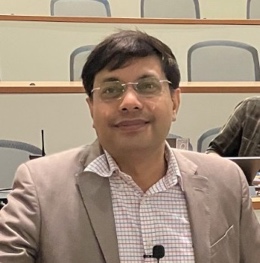
Kumar Vijay Mishra obtained a Ph.D. in electrical engineering and M.S. in mathematics from The University of Iowa in 2015, and M.S. in electrical engineering from Colorado State University in 2012, while working on NASA’s Global Precipitation Mission Ground Validation (GPM-GV) weather radars. He received his B. Tech. summa cum laude (Gold Medal, Honors) in electronics and communication engineering from the National Institute of Technology, Hamirpur (NITH), India in 2003. He is a Senior Fellow at the United States DEVCOM Army Research Laboratory; Research Scientist at the Institute for Systems Research, The University of Maryland, College Park under the ARL-ArtIAMAS program; Technical Adviser to Singapore-based automotive radar start-up Hertzwell; and honorary Research Fellow at SnT - Interdisciplinary Centre for Security, Reliability and Trust, University of Luxembourg.
Dr. Mishra has served as the Distinguished Lecturer (DL) of various societies: IEEE Communications Society (2023-2024), IEEE Aerospace and Electronic Systems Society (AESS) (2023-2024, 2025-2026), IEEE Vehicular Technology Society (2023-2025, 2025-2027), and IEEE Geoscience and Remote Sensing Society (2024-2025). He has been a Virtual DL of IEEE Future Networks Initiative (2022) and Traveling Lecturer of Optica (2025-). He is the recipient of the SAE International Award for Excellence in Innovation (2025), IEEE Signal Processing Society Pierre-Simon Laplace Early Career Technical Achievement Award (2024), Special Mention for the IEEE AESS M. Barry Carlton Award (2023), IET Premium Best Paper Prize (2021), IEEE T-AES Outstanding Editor (2021, 2023, 2024, 2025), U. S. National Academies Harry Diamond Distinguished Fellowship (2018-2021), American Geophysical Union Editors' Citation for Excellence (2019), Royal Meteorological Society Quarterly Journal Editor's Prize (2017), Viterbi Postdoctoral Fellowship (2015, 2016), Lady Davis Postdoctoral Fellowship (2017), DRDO LRDE Scientist of the Year Award (2006), NITH Director’s Gold Medal (2003), and NITH Best Student Award (2003).
Dr. Mishra is Chair (2023-2026) of the International Union of Radio Science (URSI) Commission C, Chair (2025-) of IEEE AESS Technical Working Group on Integrated Sensing and Communications (ISAC-TWG), and Vice-Chair (2021-present) of the IEEE Synthetic Aperture Standards Committee, which is the first SPS standards committee. He has been Chair (2023-2025) of the IEEE SPS Synthetic Apertures Technical Working Group. He is Editor-in-Chief (EiC) of River Rapids Series in Radar Systems, Signal Processing, Antennas and Electromagnetics (2025-), Editor (Deputy EiC) of Radio Science (2025-), Senior Area Editor of IEEE Transactions on Signal Processing (2024-), and Associate Editor of IEEE Transactions on Aerospace and Electronic Systems (2020-) and IEEE Transactions on Antennas and Propagation (2023-). He is the lead co-editor of several books on signal processing and radar: Signal Processing for Joint Radar-Communications (Wiley-IEEE Press, 2024), Next-Generation Cognitive Radar Systems (IET Press Electromagnetics and Radar Series, 2023), Advances in Weather Radar Volumes 1, 2 & 3 (IET Press Electromagnetics and Radar Series, 2023), and Handbook of Statistics 54: Multidimensional Signal Processing (Elsevier). His research interests include radar systems, signal processing, remote sensing, and electromagnetics.
Lecture 2: From Electromagnetic Fields to Human Exposure: Modeling, Interaction and Assessment in Complex Wireless Systems [10:30-12:00]
Speaker: Micaela Liberti, Università Sapienza di Roma
Contents: To create a bridge between systems and EM fields, this module include:
- EM interaction mechanisms
- tissue properties
- SAR and exposure metrics
- dosimetry
- exposure modeling
Instructor biography
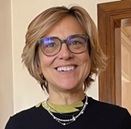
Prof. Micaela Liberti, PhD, is an Associate Professor at Sapienza University of Rome in the Department of Information Engineering, Electronics, and Telecommunications. Her research focuses on biomedical applications and health protection related to electromagnetic fields, with particular emphasis on interaction mechanisms, multiscale modeling and microdosimetry, exposure system design, and experimental validation platforms. She has been actively involved in the bioelectromagnetics community for over two decades, serving as lecturer and organizer of the Bioelectromagnetic School “Alessandro Chiabrera” in Erice since 2004. In 2025, she served as Director of the 11th course of the School, entitled “Advances in Electroporation-Based Therapy: From Principles to Clinical Applications,” held at the Ettore Majorana Centre for Scientific Culture in Erice, Italy. She served as member of the Scientific Council of the European Bioelectromagnetic Association (EBEA) since 2008 and as its President from 2019 to 2021. From 2012 to 2016, she served as National Deputy Representative of the COST Action TD1104 on electroporation-based technologies and treatments. Dr. Liberti is a member of the Scientific Expert Group of the International Commission on Non-Ionizing Radiation Protection (ICNIRP) and of the Technical Advisory Committee of URSI Commission K, serves on TC28 of the IEEE Microwave Theory and Techniques Society, and is currently President-Elect of the BioEM Society, assuming the role of President in June 2026.
Working Groups [13:00-14:40]
Theme: From Wireless Systems to Exposure Assessment
Instructors: Francesca Apollonio and Kumar Vijay Mishra
Each group analyzes a scenario:
- Automotive radar-communication system
- Multimodal (e.g., acoustic, vision, and RF) positioning, localization & tracking
- ISAC in aerial corridors
- Multimodal environmental sensing
Each group identifies:
- system characteristics
- EM field characteristics
- propagation environment
- exposure metrics
Each group will prepare a short 2–3 slide summary and present it during a brief plenary discussion.
Instructor biography
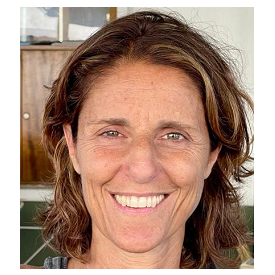
Francesca Apollonio received her Ph.D. from Sapienza University of Rome, Italy, in 1998. She is a Full Professor in the Department of Electronic Engineering at Sapienza University of Rome, where she has been affiliated since 2003. She currently serves as Chair of URSI Commission K, Electromagnetics in Biology and Medicine, and is a member of the Board of Directors of the BioEM Society. Within the BioEM Society, she served as Technical Program Committee Chair for the 2024–2025 annual meeting (BioEM2025). Since 2022, she has been a member of the IEEE MTT-S Technical Committee TC-28, and since 2020 she has been part of the Scientific Expert Group of the International Commission on Non-Ionizing Radiation Protection (ICNIRP). From 2016 to 2020, she was the National Representative for COST Action CA15211. She also served as Technical Program Committee Chair for the BioEM2016 Annual Meeting of the Bioelectromagnetics Society (BEMS) and the European BioElectromagnetics Association (EBEA). From 2012 to 2015, she was a member of the BEMS Board of Directors. She has authored more than 200 scientific publications in international peer-reviewed journals, conference proceedings, and book chapters. Her research interests focus on the interactions between electromagnetic fields and biological systems, including electroporation, smart drug delivery, molecular simulations of complex systems, and the dosimetry and design of exposure systems.

.png)
.png)

.png)






.jpg)